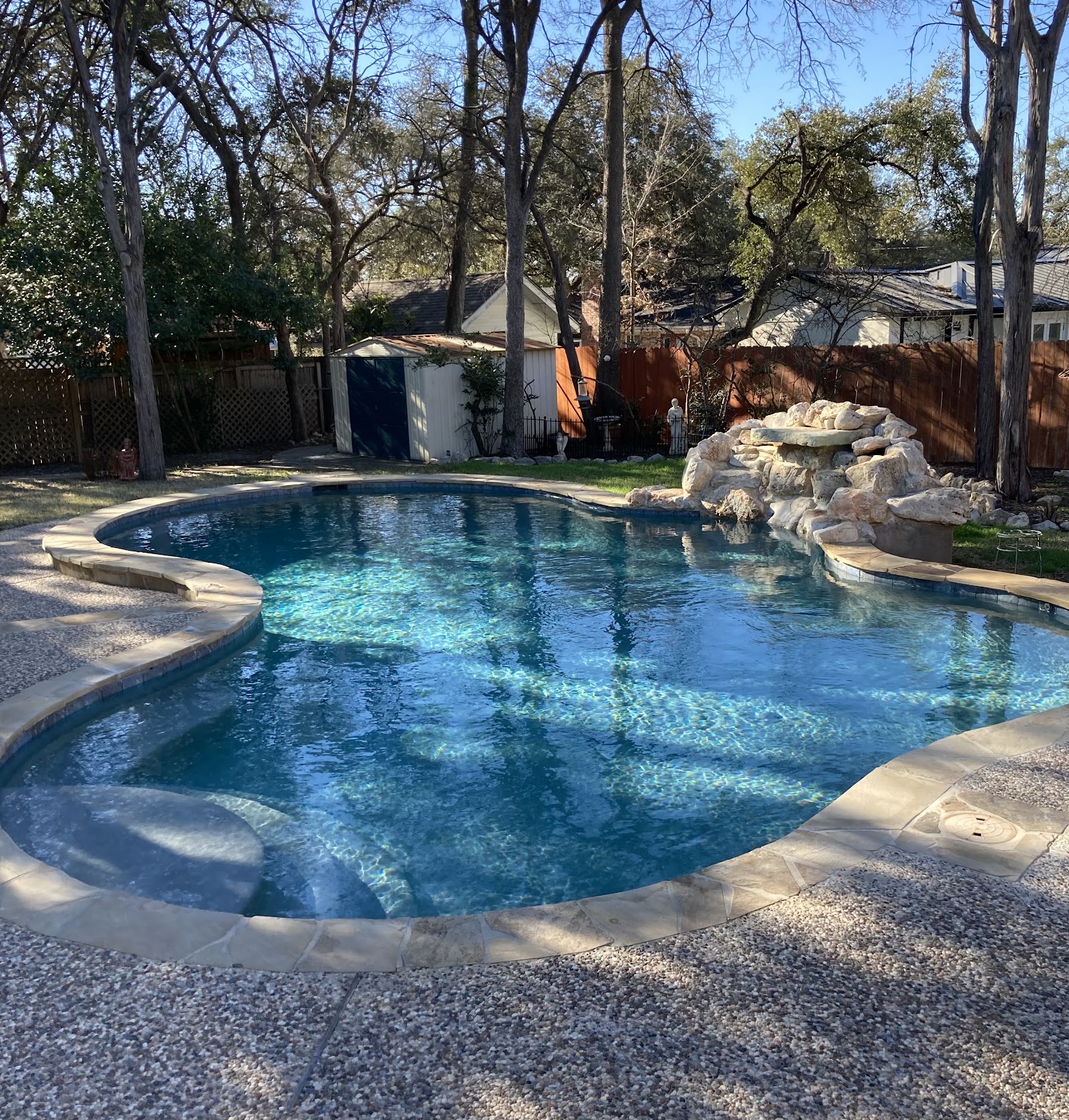
The three main pool finish categories
When it is time to resurface your pool, you have three common choices: standard white plaster, quartz aggregate finish, and pebble aggregate finish. Each one is a cement-based material applied over the gunite shell, but they differ in the type and size of aggregate mixed in, the application technique, and the final look and feel. The finish you choose affects how the pool looks, how long it lasts, and how much maintenance it needs.
Plaster is the original pool finish, made from white Portland cement and marble dust. Quartz finishes add crushed quartz crystals to the mix, giving a sparkly appearance and a smoother feel. Pebble finishes use small river stones or pebbles, creating a textured surface that hides stains well. All three are applied by a crew that mixes the material on site and trowels it onto the walls and floor. Understanding the trade-offs helps you pick the right one for your home.
Standard plaster: classic and affordable
White plaster is the most budget-friendly option and has been used for decades. It gives a smooth, bright surface that reflects light and makes the water look clear and blue. Plaster is the fastest to apply and cure, so the renovation timeline is shorter. However, it is also the softest finish, meaning it is more prone to staining, etching, and chipping over time. A typical plaster finish lasts 8 to 12 years with proper care.
The main downside of plaster is that it requires careful water chemistry management. If the pH or alkalinity drifts out of range, the surface can etch or develop calcium deposits. Plaster also shows dirt and algae more easily than textured finishes. For homeowners on a tighter budget or those who plan to sell the property within a few years, plaster is a solid choice. Just be prepared to brush often and keep your chemical levels in check.
Quartz finish: smooth with extra durability
Quartz pool finishes are a step up from standard plaster. They blend white or colored Portland cement with crushed quartz crystals, which are harder than marble dust. The quartz adds sparkle and gives the surface a slightly more durable finish that resists staining and etching better than plain plaster. The texture is still smooth to the touch, making it comfortable for swimmers while being more forgiving of chemical imbalances.
Quartz finishes come in a range of colors, from pale blues and grays to darker tones that hide debris. They typically last 12 to 15 years, longer than plaster, because the quartz aggregate is harder and less porous. The cost is higher than plaster but lower than pebble. If you want a smooth finish that lasts longer and requires less frequent chemical babysitting, quartz is a good middle-ground option. The crew applies it the same way as plaster, but the final look is more refined.
Pebble finish: textured and long-lasting
Pebble finishes use small river stones or pebbles mixed into the cement base. The aggregate is exposed during the finishing process by washing away the surface cream, leaving a textured, natural-looking surface. This texture hides stains, algae, and minor imperfections better than smooth finishes. Pebble is the most durable of the three options, often lasting 15 to 20 years or more before needing replacement.
The trade-off is that pebble feels rough on bare feet, especially in the shallow end and on steps. Some homeowners find it uncomfortable, though the texture does provide good traction. Pebble finishes are also more expensive and take longer to apply because the crew must wash the surface carefully to expose the aggregate evenly. The color options are wide, and the finish can mimic natural stone or lagoon-style pools. If you want maximum longevity and do not mind a textured surface, pebble is the best choice.
How to decide which finish fits your pool
Start by thinking about how you use your pool. If you have young children or elderly swimmers who spend time on steps and benches, a smooth finish like plaster or quartz is more comfortable. If you are willing to brush and test water chemistry weekly, plaster will save you money upfront. If you prefer a low-maintenance surface that hides dirt and lasts longer, pebble or quartz are better investments.
Talk to the crew about your pool's exposure to sunlight, the local water hardness, and how often you plan to use the pool. They can show you samples of each finish so you can feel the texture and see the color in natural light. The crew will apply the finish on site, mixing the material in your driveway and troweling it onto the pool surface. Ask for a detailed estimate that lists the finish type, material, and expected timeline so you can compare your options with confidence.