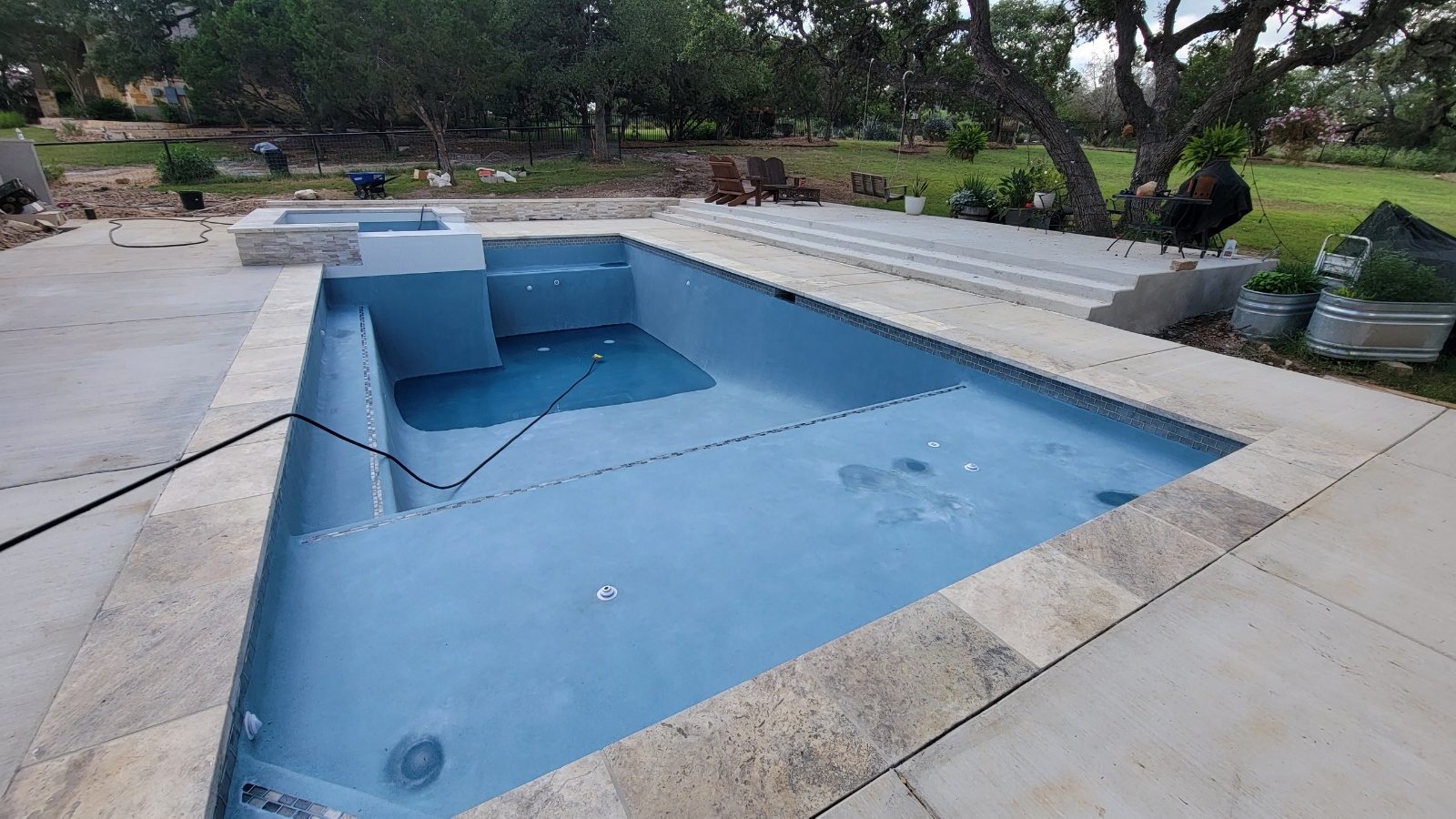
Why the Questions Matter
Pool plastering is a permanent finish that gets applied in one continuous pour. Once it sets, you cannot undo a poor mix or a bad bond without chipping out the whole surface and starting over. That makes the choice of contractor as important as the choice of material. A crew that shows up on time, mixes the batch correctly, and finishes the surface evenly will give you a pool that looks good and lasts for years. A crew that cuts corners or rushes the job will leave you with blotches, rough spots, or early cracking.
Because the work happens at your house, you get to watch the crew in action. But by the time the truck arrives, it is too late to change your mind. The smart time to ask hard questions is before you sign anything. You want to know how the crew prepares the old surface, what mix they use, how they handle the weather, and what happens if something goes wrong. The answers will tell you whether you are dealing with a professional or someone who is just filling a truck.
Mixing and Materials on the Job
Ask what brand and type of plaster they plan to use. Standard white plaster is a blend of white cement and marble dust, but many contractors now offer additives such as polymers or pozzolans that reduce shrinkage and improve bond strength. A good contractor can tell you the exact product name and why they chose it for your pool. They should also explain how they control the water-to-cement ratio on site. Too much water weakens the plaster; too little makes it hard to work. The batch should be mixed for a consistent time and checked for slump before it goes in.
Also ask how they handle the start of the pour. The crew should wet the existing shell before applying the new plaster so the old concrete does not suck moisture out of the fresh mix. This is called a bond coat or a wetting step. If the contractor skips it, the new plaster can delaminate within a year. A straightforward answer here tells you they understand the chemistry. A vague answer or a shrug means they may not know why that step matters.
Crew Experience and On-Site Practices
Ask how many people will be on the crew and how long they have been working together. Plastering is a team sport. One person mixes, two or three trowel, and one handles the water hose. If the crew has worked together for a while, they will move smoothly and finish the surface before it sets. A crew that is thrown together for one job may leave trowel marks or uneven thickness. You can also ask whether the crew specializes in pools or does plastering as a side line. Pool plaster is different from wall plaster, and the skills do not transfer directly.
Ask about cleanup. Our crew loads up all equipment, hoses, and mixing gear and takes it away when the job is done. The plaster dust and wash water should be contained so it does not run into your yard or storm drains. A responsible contractor will have a plan for washout and disposal. If the contractor cannot describe how they keep your property clean, that is a red flag. You live there, and you should not be left with a mess.
Warranty and Follow-Up Care
Ask what the warranty covers and how long it lasts. Most plaster warranties cover defects like cracking, delamination, or color mottling that appear within a certain period. But the warranty should be in writing, and it should name the specific conditions. Some warranties cover only the material, while others cover labor as well. Ask who pays for the water to fill the pool after the work is done, and who handles the start-up chemistry. The first 30 days of water care are critical to the plaster's cure, and a good contractor will give you a written schedule for brushing and chemical balancing.
Also ask what happens if a problem shows up after the crew leaves. Will they come back to inspect it? Do they have a process for evaluating a complaint? A contractor who is willing to stand behind the work will tell you exactly how to reach them and what to expect. If they dodge the question or say "we have never had a problem," that is a sign they have not thought about it. Every job can have issues, and the mark of a professional is how they handle them.
How to Compare Bids Fairly
When you get multiple bids, lay them side by side and look at what is included. One bid may be lower because the contractor plans to use a thinner coat, a cheaper mix, or skip the bond coat. Another may be higher because it includes a better material, a longer warranty, or a more thorough preparation. Do not compare only the bottom line. Compare the scope of work, the number of coats, the thickness of the plaster, and the type of finish. A cheap bid can cost you more in the long run if the plaster fails early.
Ask each contractor to list the steps they will take from start to finish. A good bid will include draining the pool, chipping out loose plaster, acid washing the shell, patching any cracks, applying the bond coat, mixing and applying the plaster, and finishing with a trowel. It should also say who handles the refill and the start-up chemicals. If a bid skips any of these steps, ask why. The goal is to hire the crew that does the complete job, not the one that leaves out the hard parts.